
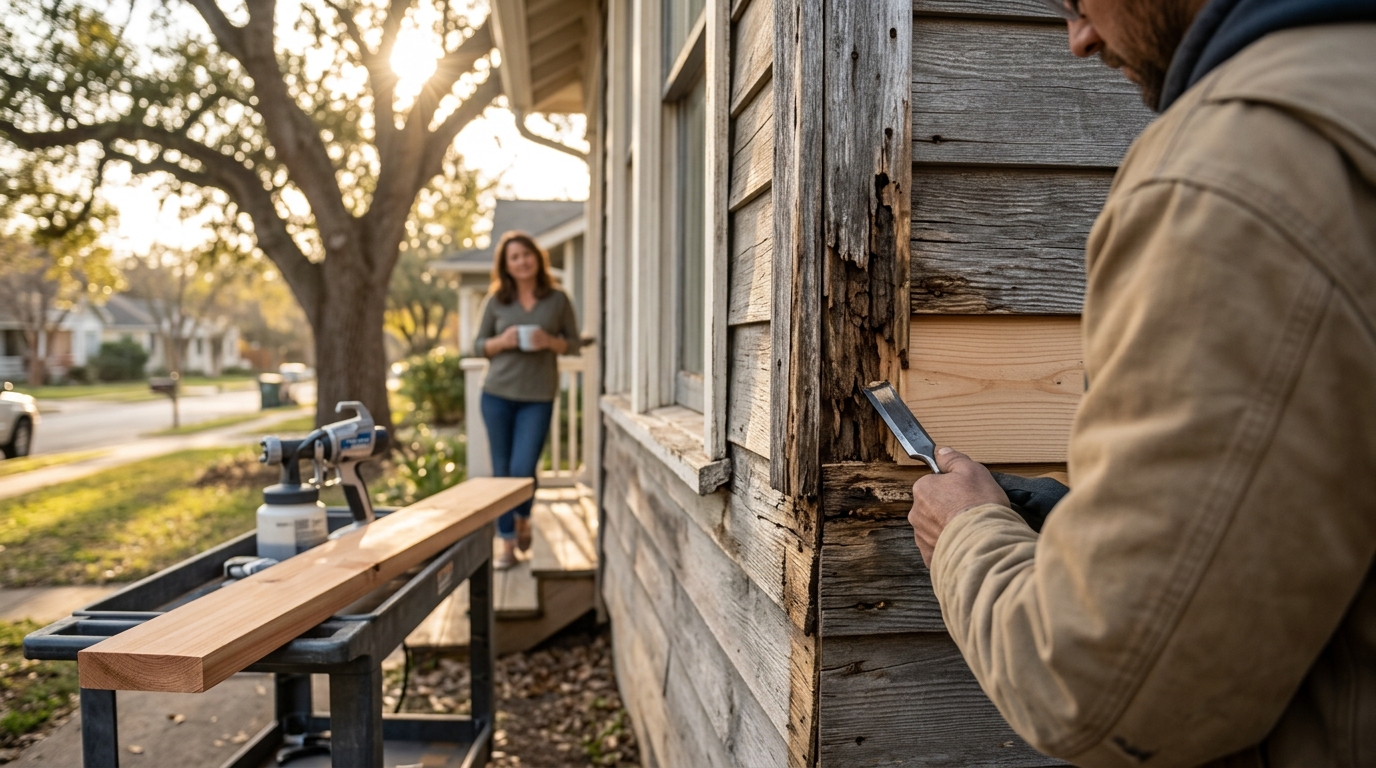
What should I know about fixing rotted wood siding before painting my house?
Fixing rotted wood siding requires removing all decayed material, treating the surrounding wood, and installing new, moisture-resistant lumber before any paint is applied. Painting over rot is a temporary fix that will fail quickly. Texas Lonestar Painting in San Antonio emphasizes that proper structural repair is the foundation of a durable exterior finish.
Identifying the Extent of Wood Rot
Wood rot is a fungal decay that weakens the structural integrity of your home's exterior. It often starts in hidden areas, such as the bottom of siding boards, window sills, or where wood meets concrete. Homeowners should look for soft, spongy spots, dark discoloration, or peeling paint that bubbles when pressed. If a screwdriver sinks easily into the wood, the material is compromised. In San Antonio's humid climate, rot can spread faster than expected, making early detection critical.
The Risks of Painting Over Decay
Applying paint to rotted wood is a common mistake that leads to long-term damage. Paint is a surface coating, not a structural repair. When applied to decayed wood, it traps moisture inside the material, accelerating the fungal growth. The new paint will likely peel, crack, or blister within a few years, leaving you with a more expensive repair job. Texas Lonestar Painting advises that a fresh coat of paint cannot save a structurally unsound board. The only viable solution is to remove the damaged wood entirely.
Step-by-Step Repair Process
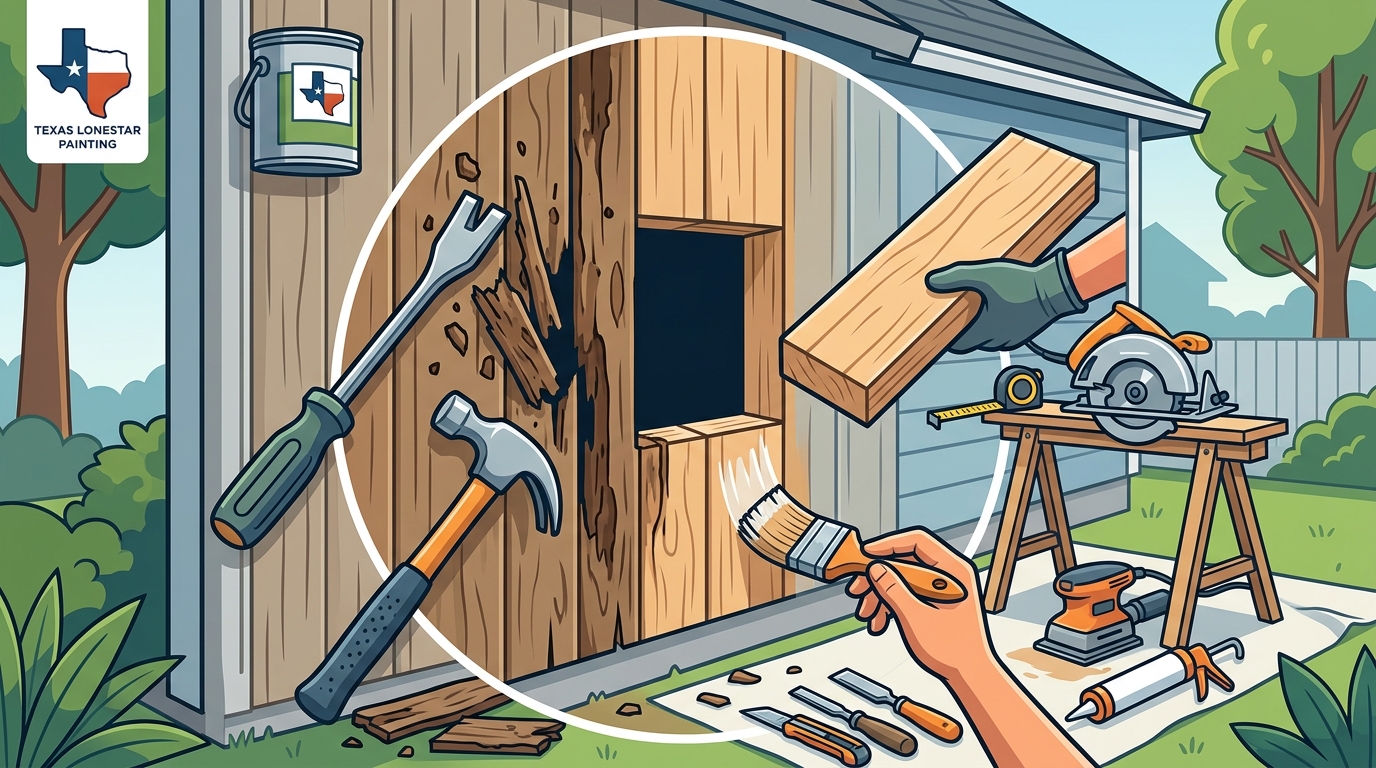
Repairing rotted siding involves a precise sequence of steps to ensure longevity. First, remove the damaged boards and any adjacent wood that shows signs of decay. Next, treat the exposed framing with a wood hardener or fungicide to stop the spread of rot. Then, cut new replacement boards to fit the existing gaps. Finally, prime the new wood thoroughly before painting. This process ensures that the new siding bonds correctly with the existing structure and resists future moisture intrusion.
Choosing the Right Replacement Materials
Preparation for a Durable Paint Job
Once the repairs are complete, proper surface preparation is essential for a long-lasting paint finish. All repaired areas must be sanded smooth to blend with the surrounding siding. Any gaps or seams should be caulked to prevent water entry. Finally, apply a high-quality exterior primer to the new wood. Primer seals the raw lumber and provides a uniform base for the topcoat. This preparation step is often overlooked but is vital for preventing future peeling and fading.
Key Takeaways
- Never paint over rotted wood; it will fail and cause further damage.
- Remove all decayed material and treat the surrounding wood with a fungicide.
- Use pressure-treated or composite materials for replacement siding in humid climates.
- Prime new wood thoroughly before applying exterior paint.
- Regular inspections can catch rot early, saving money on major repairs.
- Professional repair ensures structural integrity and a uniform finish.
Frequently Asked Questions
Can I use wood filler to fix small spots of rot?
Wood filler is only suitable for very minor surface decay, less than a quarter inch deep. For structural rot, filler will not provide the necessary strength. You must replace the damaged wood to ensure the siding remains secure.
How long does it take to repair rotted siding?
The timeline depends on the extent of the damage. Minor repairs may take a day, while extensive rot requiring multiple board replacements can take several days. Drying time for primers and paint also adds to the schedule.
Do I need to replace the entire siding section?
No, you only need to replace the boards that are rotted. However, you should inspect adjacent boards for hidden decay. If the rot is widespread, replacing a larger section may be more cost-effective in the long run.
What type of paint is best for repaired wood siding?
Use a high-quality exterior acrylic latex paint. These paints offer excellent flexibility and moisture resistance. Ensure the paint is rated for exterior use and is compatible with the primer you applied to the new wood.
How can I prevent future rot in my siding?
Regular maintenance is key. Keep gutters clean to direct water away from the siding. Trim back vegetation that touches the house. Inspect the siding annually for signs of moisture damage or peeling paint. according to Sub Standard Siding
Is it worth hiring a professional for this repair?
Yes, professional repair ensures that the structural integrity is restored and the finish is uniform. Texas Lonestar Painting provides expert assessment and repair services to protect your investment.
Conclusion
Addressing rotted wood siding before painting is essential for protecting your home. By removing decay, using quality materials, and preparing the surface correctly, you ensure a durable and attractive exterior. Texas Lonestar Painting in San Antonio offers comprehensive exterior painting and repair services to help you maintain your property's value and appearance. Contact us today for a free estimate and expert advice on your siding repair needs. according to Sub Standard Siding