

Before hiring a deck staining service in San Antonio, you must verify their preparation methods, product selection, and structural inspection protocols. The intense Texas sun and humidity demand specialized UV-resistant sealants and deep-cleaning techniques to prevent wood decay. Texas Lonestar Painting provides expert guidance on these critical factors to ensure your outdoor investment lasts for years.
The Impact of San Antonio Climate on Wood
San Antonio weather is uniquely harsh on outdoor wood structures. The combination of intense UV radiation and high humidity accelerates the aging process significantly. Wood exposed to these conditions can bleach, crack, or warp within a single season if left unprotected. This environmental stress makes professional intervention far more critical than in milder climates.
UV radiation breaks down the lignin in wood, causing it to turn gray and brittle. Simultaneously, moisture absorption leads to swelling and subsequent shrinking as the wood dries. This cycle weakens the structural integrity of your deck or fence. Understanding this dynamic helps you appreciate why standard consumer-grade products often fail in Central Texas.
Professional staining services address these specific threats directly. They use products formulated to act as a shield against both sun and water. This dual protection is the primary reason for hiring a specialist rather than attempting a DIY project. The goal is to maintain the wood's natural beauty while ensuring its longevity.
The Critical Role of Surface Preparation
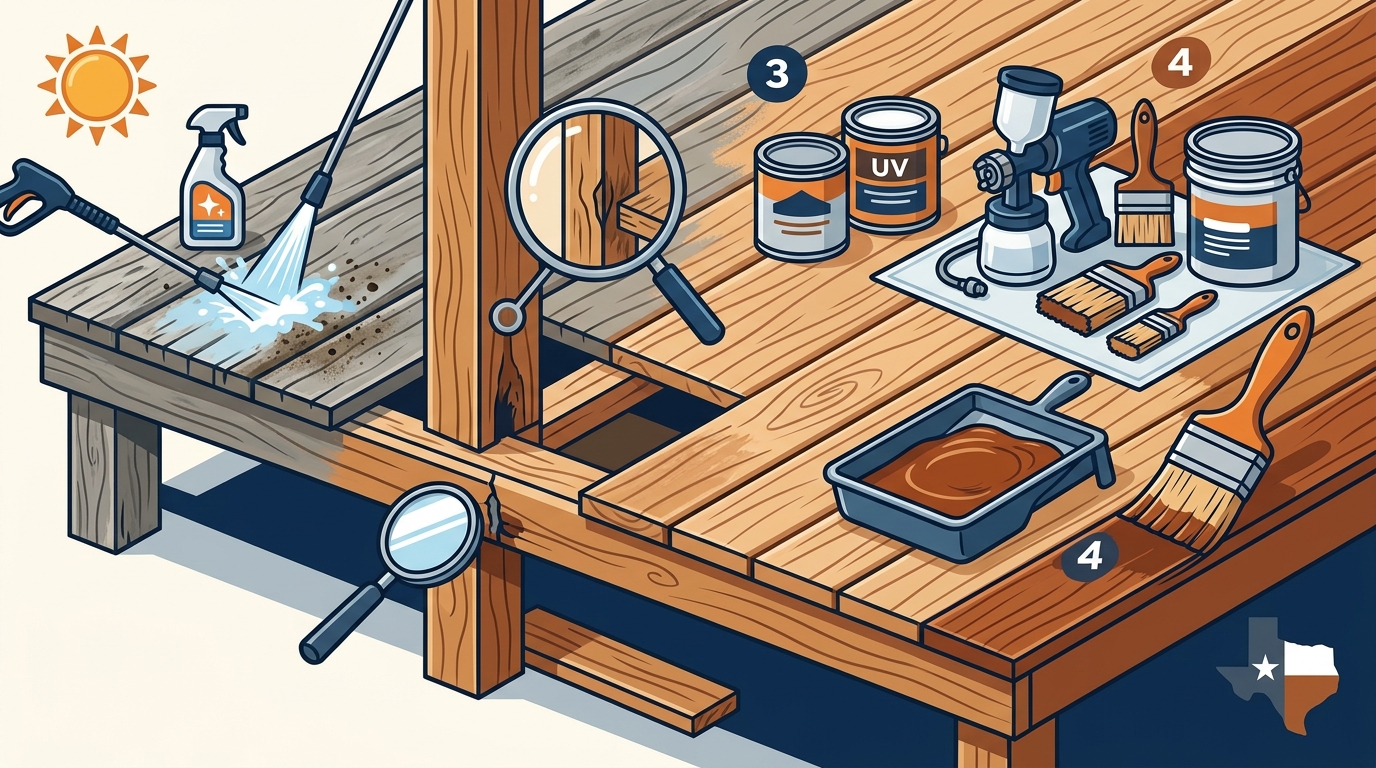
Surface preparation is the most important step in any deck staining project. Applying stain over dirty, grayed, or moldy wood results in poor adhesion and premature failure. A professional crew must perform a deep clean to remove years of accumulated pollutants. This process ensures the stain penetrates deep into the wood grain for a durable finish.
Professional-grade pressure washing is the standard for this deep clean. It removes graying, mold, and mildew that simple scrubbing cannot reach. Texas Lonestar Painting emphasizes that you should never apply stain over dirt. The cleaning phase is non-negotiable for a long-lasting result. It sets the foundation for the entire project.
During preparation, professionals also inspect the structure for damage. They look for loose boards, protruding nails, or signs of rot. Identifying these issues early prevents safety hazards and costly repairs later. A reputable service provider will ensure your deck is structurally sound before applying any product. This thoroughness distinguishes a professional job from a quick, superficial fix.
Choosing the Right Stain and Sealant
Product selection is a major decision that affects both appearance and protection. Stains generally fall into three categories: transparent, semi-transparent, and solid. Each offers a different balance between showing the wood grain and providing color coverage. The right choice depends on the condition of your wood and your aesthetic preference.
It is crucial to discuss these options with your contractor before work begins. A knowledgeable provider will assess your wood's condition and recommend the best fit. They should explain the pros and cons of each option clearly. This consultation ensures you are not surprised by the final look. It also guarantees the product matches your specific needs and budget.
Professional Application Techniques
Application technique determines the uniformity and durability of the finish. Professional crews use a combination of spraying and back-brushing for optimal results. Spraying allows for quick, even coverage over large areas. Back-brushing ensures the stain is worked into every fiber of the wood. This method maximizes protection and prevents streaking.
Proper masking is another key aspect of professional application. Crews must protect surrounding areas like pools, siding, and landscaping from overspray. This requires careful planning and execution. A sloppy application can damage your property and lead to costly cleanup. Professional teams arrive prepared with the right tools and techniques to avoid these issues.
Timing is also critical in San Antonio. Staining should be done when the weather is dry and mild. Extreme heat can cause the stain to dry too quickly, leading to uneven absorption. Rain can wash away the product before it cures. A professional service will schedule the work during optimal weather windows. This attention to detail ensures a flawless finish.
Questions to Ask Before Hiring
Before signing a contract, you should ask specific questions to vet your provider. First, ask about their preparation process. Do they use professional-grade pressure washing? Do they inspect for structural damage? These answers reveal their commitment to quality. A vague response is a red flag.
Second, inquire about the products they use. Are they UV-resistant? Are they suitable for the specific type of wood you have? Ask for brand names and product lines. This transparency helps you compare options and understand what you are paying for. It also ensures the products are appropriate for the San Antonio climate.
Finally, ask about their warranty and cleanup process. Do they guarantee their work? How do they handle touch-ups? A reputable company will stand behind their work. They will also leave your property clean and tidy. These details matter as much as the stain itself. They reflect the professionalism of the team.
Key Takeaways
- San Antonio's intense sun and humidity require UV-resistant sealants to prevent wood decay.
- Professional preparation, including deep pressure washing, is essential for stain adhesion.
- Structural inspections during prep identify loose boards or rot before staining.
- Choose between transparent, semi-transparent, or solid stains based on your aesthetic goals.
- Professional application uses spraying and back-brushing for uniform, durable coverage.
- Ask about product brands, preparation methods, and warranty terms before hiring.
Frequently Asked Questions
How often should I restain my deck in San Antonio?
Depending on the product and sun exposure, you should restain every 2 to 3 years. Transparent sealers may need more frequent application than solid stains. Regular maintenance extends the life of your wood significantly.
Can I stain my deck myself?
You can, but professional preparation and application yield better results. DIY projects often lack the deep cleaning and structural inspection that professionals provide. This can lead to premature failure and wasted money.
What is the best stain for Texas heat?
UV-resistant sealants are best for Texas heat. They protect against bleaching and cracking. Look for products specifically formulated for high-sun climates. These products offer superior durability in harsh conditions.
Do you need to remove old stain before applying new stain?
Not always, but you must remove dirt, mold, and loose material. If the old stain is peeling, it may need to be stripped. A professional will assess the condition and recommend the best approach.
How long does the staining process take?
Most residential deck staining projects take 1 to 2 days. This includes preparation, application, and cleanup. The exact time depends on the size of the deck and weather conditions.
Conclusion
Hiring a deck staining service in San Antonio requires careful consideration of climate, preparation, and product choice. The local environment demands specialized techniques to protect your investment. Texas Lonestar Painting offers expert deck and fence staining services designed for the South Texas climate. To plan your project, for a free estimate.